
Learning from the Easter Fly-in
With reports and reflections from the Easter flying coming in, here are my two cents:
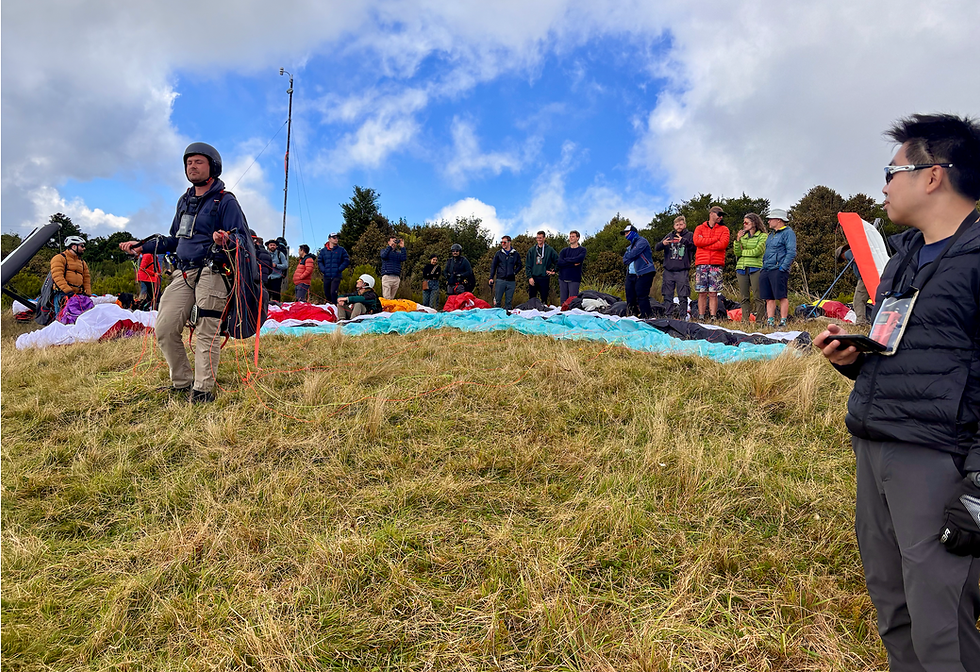
Reuben and I were teaching 10 PG2 students over the three days we were at the Paeroas. We arrived a day early to get some flights in before the crowds showed up.
Sending off 10 people twice a day meant I was at launch almost the entire time, which at least gave me the chance to catch up with everyone. I seem to have graduated to professional “wing fluffer” — as Tony kindly (?) called me.
For our students, launching in front of so many spectators was challenging. As an instructor, I also felt a bit under the microscope. Despite that, the students completed around 60 fantastic flights, with lots of personal bests: longest, highest, and furthest flights, lightest-wind launches, biggest audience, and even lightest-wind landings. They were amazing.
We had only one real mishap from an inexperienced and nervous pilot, with no damage beyond a few bruised egos — I’d call that a good result.
I also had the chance to watch many other pilots launching. From an instructor’s perspective, that was both interesting and, at times, entertaining.
Most launches were good — some excellent, some elegant, and some… less so.
General observations

Pre-flight checks
These were mostly done well, but I noticed a number of PG2+ pilots launching with issues such as unattached speed bars, knots in lines, or brake handles tangled around risers. Easy to do when you are excited and eager to get into the air!
Most of these problems should be caught during pre-flight checks. However, for us coastal pilots, launching in light winds creates a different challenge: we often need to check everything with the glider laid out on the ground, in grass, without being able to build a wall or do partial inflations to inspect lines and check for knots or tangles. The opportunity to double-check during reverse inflations isn’t always there either.
This significantly changes the requirements for pre-flight checks. Where reverse inflation isn’t possible, we need to be extra thorough beforehand. That’s something worth keeping in mind for next time.
Space constraints didn’t help either — long grass, vegetation, and multiple pilots all competing for limited setup space made preparation tricky.
That said, I was impressed with how well everyone shared the space and remained patient while waiting for launch opportunities. To offset the extra time our students needed, I tried to help others lay out and get airborne where possible. Overall, everyone’s cooperation made things work smoothly.
Gear prep for the cold
Some pilots landed early because they were cold. Easter is late in the season, the central North Island is significantly colder than Auckland and the coast, and we were flying at higher altitudes than usual.
Next time: come prepared for colder conditions.
Launching skills
Nerves, spectators, waiting pilots, and unfamiliar conditions all add difficulty to launching.
We had a full range of experience levels — from PG1 pilots with around 10 flights to instructors and seasoned competition pilots. Unsurprisingly, the range of launch quality matched that diversity.
Everyone messes up the occasional launch. I often say it’s our job to mess one up now and then — just to make others feel better about theirs. Let's be honest: Launching is what takes most practice. But as experience increases, the ratio of good to poor launches should improve. The excitement on the day, people waiting behind you, the number of spectators, variable conditions all add to the diffcutly.
Over Easter, we saw a bit of everything. What stood out to me was that launching and ground-handling skills varied widely at every level, including across NZHGPA ratings. We saw excellent launches from newer pilots and some significant mistakes from very experienced ones.
Mistakes happen — that’s normal. But from an instructor’s perspective, it’s usually easy to tell the difference between an occasional error and a lack of skill or currency.
All PG2 pilots and above should make sure their skills stay sharp. This is even more important for instructors and tandem pilots. Ground handling skills need to be solid, and that means refreshing skills when we get rusty, when we change equipment, or when we fly in unfamiliar conditions or locations. I have certainly done many rounds of needing to refresh my skills over my near 40 years of flying.
There’s really no excuse to continue lacking core skills beyond your first season. Some pilots may have realised over the weekend that they have work to do. I realised I have to check carefully when (constantly) changing equipoment.
This isn’t new advice: Practice ground handling! Learn new techniques. Share knowledge. It’s fun, rewarding, and makes us all better pilots.
There are plenty of opportunities to improve — refresher courses, ground-handling sessions, and specialist clinics. Reuben and I are always ready to help, so are many others, Many of us recently learned cobra launching, for example. But beyond that, every pilot can spend time in a local park practicing and improving.

Landings
I didn’t see many other than Tony's fine top landing at launch — ask Reuben about that. I did notice a few cow-pat-stained harnesses, so I can make an educated guess.
Landing inland, compared to coastal sites, requires adjustment and practice. Good approach planning is key. More importantly, landing speed matters: come in faster, accept higher ground speed (which comes with better glide and stability), and flare decisively.
That’s second nature for pilots used to light-wind landings, but it can feel unfamiliar for coastal pilots. For our students, we have an online theory session to prepare for inland flying after coastal training. Ask us for access if you are interested.
We are always ready to assist you with your flying career, whether you learned with us or not! Please ask for advice any time. Join some courses or trips if that sutis you! France is next, July 2026, Italy in September 2026, refresher courses at home in September to start the new season 2026/27, Wanaka in Jan 2027. Go for it!


Comments